Indoctrinated into the Cult of Neurodivergence
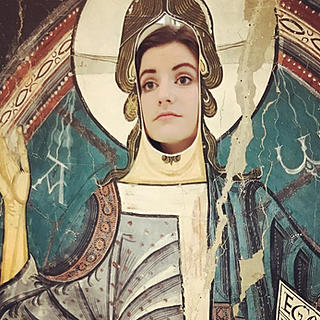
Together, we diverge.

Well, well, well. It turns out, us neurodivergent writers — who spent our whole lives being forced to adhere to a norm and mimic the masses — were secretly sleeper agents all along who’ve been activated by the emergence of disingenuous AI and the sudden demand for fallible authenticity. Our mission is clear — articulate sensation, process slowly, and be unapologetically human.
Unapologetically human, to me, means not being afraid of nuance. In a world that copes with its control issues by obsessing over binaries — black and white, male and female, us and them, good and evil, "it's not x, it's y", etc. — I've gotten really into adorning myself with shifting spectrum and gaudy details. So let's dive into something I think a lot of us on the autism spectrum have actively avoided discussing for the sake of simplicity:
What if we're wrong?
I've been thinking a lot about what autism means on both a personal and collective level, because I was recently diagnosed at the age of 35, and because so many others recently have as well, and I suppose I've been worrying…wondering… whether I've been swept up in a trend. Or worse, a cult.
I think that might be the real reason I didn't tell anybody publicly for almost a year after my diagnosis. Physical and financial safety was, of course, a factor. Would I be hired for jobs if people knew? Were autistic people being set up to be the new monster of the week once immigrants and trans people had been wrung dry? But it was more than that —
I was worried it was possible that I was wrong.
Not just, "Maybe I won't be diagnosed because I don't necessarily act like the folks on "Love on the Spectrum" or like my coworker's nephew — wrong, but also, "Maybe the psychiatrist is in on the conspiracy" — wrong.
Cults and fads have been started since the dawn of civilization by making people feel inexplicably seen. It's called the "Barnum Effect", and it's the psychological phenomenon where people believe that vague, generic personality descriptions apply specifically to them. I know it's a real thing because it explains how I can look at my horoscope app on a day when it's given me a poetic insight into my life, and I can imagine that ✨the stars have me in mind✨.
But then the next day, the app decides to bet on specificity, I end up on the losing side of those odds, and horoscopes become silly and stupid and everyone who believes in them is silly and stupid… until the next day, when it's inexplicably accurate again and I'm like, "no way" and text a screenshot to my sister who's like, "no way".
I’ve been wrong publicly before and it freaking sucked, I hate that feeling, I do everything I possibly can to never be wrong ever. One of the things I do to never be wrong is — I shut my mouth and suppress my voice. My long-practiced, lovingly-honed, built story-by-story, generations-upon-generations voice.

For a long time before, during, and after my diagnosis, I stopped feeling like I could write my truth because my truth was consumed by identity crisis muck-trudging and back-peddling. I was simultaneously obsessed with potentially having found the answer to all my life's mysteries… and worried I’d simply glommed-on to a collective discomfort and frustration with current systems and methods of thought, which had accidentally pathologized itself in a bid for tangible validation… you know?
Why were so many people being diagnosed all of a sudden? How could I trust anything I saw online when I knew my algorithm was spoon-feeding me content based on what I couldn’t look away from, regardless of whether that attention stemmed from intellectual stimulation, sensory satisfaction, or sheer horrified fascination?
The list of potential indicators for autism is long and relatable. I worried it was too long and too relatable. Things like social anxiety and nail-biting seemed pretty normal. Who doesn't occasionally become uncomfortably conscious of the eye contact they're making? And if people didn't have special interests and obsessions, what was even their purpose in life? Surely, anyone with breath in them must be getting themselves up out of bed for having found an interest in something.
Subjectively and objectively (which are two words I can never seem to stop mixing up and I think that’s pretty normal), anxiety and special interests are… pretty normal. So are those of us who fit the current diagnostic criteria being mass-gaslit to think we’re somehow different/diagnosable/wrong/divergent for those experiences?
What I was hearing from the internet about it was confusing. People were telling me that my normal wasn't normal, which is a hard pill to swallow for someone who, consciously and subconsciously, was always so concerned with looking normal. Some might say too concerned with looking normal …as if it's something that's always been beyond my reach…
But that's normal, is it not?? Wasn't every protagonist in every television show, book, and movie concerned with looking normal? If media wasn't representative of society, how the hell else were we supposed to know how to act and what to expect? From what I could tell, trying desperately to fit in was the most common, normal experience a person could possibly have and the only real difference between people was who was willing to own up to that anxiety and who wasn't.
It wasn't until I got past those generic descriptors and found myself in more specific territory (the oft-mentioned “If you’ve met one autistic person, you’ve met one autistic person”) that I started to admit to myself that, as hard as I had tried to minimize certain compulsions, symptoms, and sensitivities, they'd been there all my life.
It's just that I had categorized them as "character flaws", not differences.
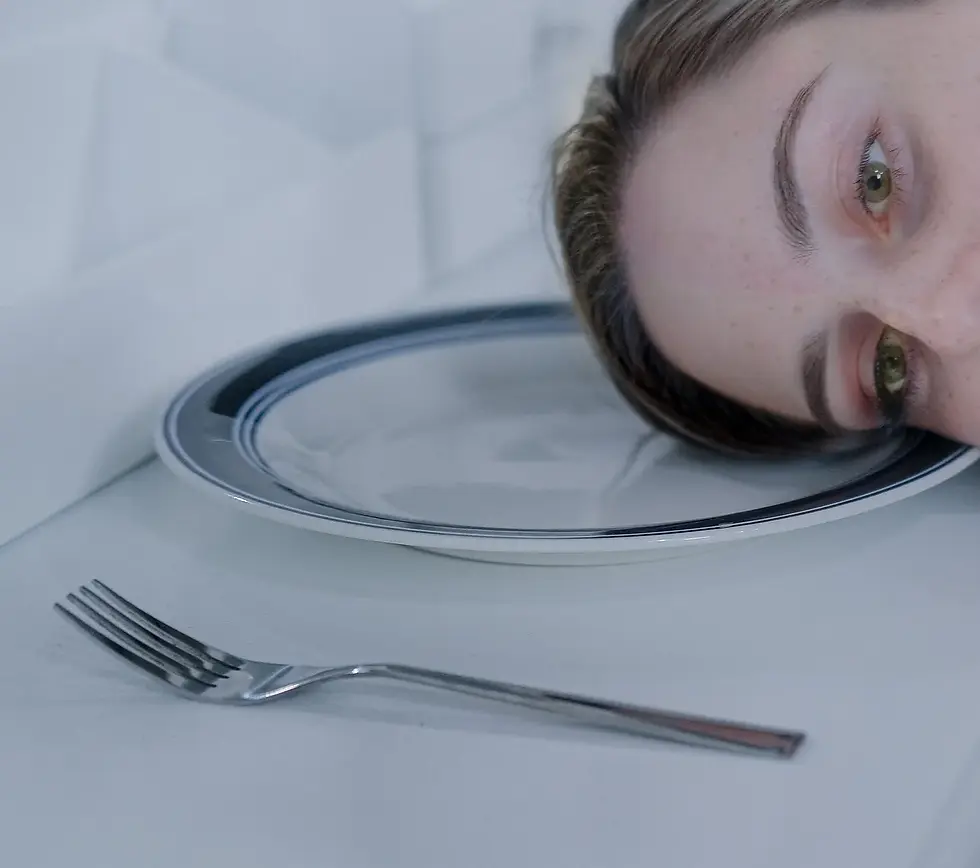
My eating disorder wasn't normal.
To have panic attacks when presented with unfamiliar food to such a degree that it should regularly interfere with daily life and plans wasn't normal. I say "wasn't" because it's gotten much better over the years (at least the texture aspect of it), but teachers used to send me home with notes about the big bags under my eyes and how malnourished I looked and it was because I was refusing to eat. Sitting at the table until midnight because my will to not eat was so much stronger than my parents could have possibly imagined when they declared that I wasn’t allowed to leave the table until I’d had at least a bite.
These days, I've got a big'ol juicy booty, and I only have panic attacks when I accidentally eat meat. But you know who doesn't have to eat meat? Vegetarians. So the second I learned that word, at 8 years old, boom, I was a vegetarian. Like magic, they stopped making me eat meat. It was only one category in a mess of foods I still had to face, but it was the biggest, scariest one and it went away over night.
People would say, “Oh, you’re a vegetarian? I tried for a few months and couldn’t keep it up. You must have serious discipline.”
Nah.
I've gone years without incident, but the other day, at a restaurant with friends, I accidentally ordered the chicken enchiladas and didn't realize it until I'd taken a bite. When I realized what I'd just chewed and swallowed, some piece of me floated outside of myself and was fascinated to observe that my body still reacted the same way it always had.
I watched myself make an excuse to go to the bathroom, try to calm my racing heart, contemplate sticking a finger down my throat to get it out of me (something I've never actually done because crying, stimming, washing my hands a few times, and aggressively picking and biting at my skin comes far more naturally and is, believe it or not, healthier). I then watched myself compose myself enough to go back to my table and tune out of the dinner conversation entirely for the next half-hour.
When I was a kid, and well into my twenties, even, I was leaving gatherings because I simultaneously couldn't stand to refuse food that had been so lovingly prepared and offered to me… but I also couldn't bring myself to put that food into my mouth without crying and retching.
It wasn't body dysmorphia, it was compulsion.
No, you know what? Please excuse this tangent, but if we’re ever going to understand neurodivergence, there’s a certain amount of divergence that’s going to be required. It was the earth falling out from underneath me at the idea of being the final resting place of a creature that once had a soul.
It was guilt over having so indelicately treated that creature's body, which deserved a burial like the one I gave my beloved pet when they'd died. Or like the cornish game hens we'd mummified in the 6th grade when we were learning about Ancient Egypt. Let’s be so for real and admit that I didn't, and still don't, see any difference between eating human flesh and eating animal flesh. When I was a kid, it was just this massive, overwhelming panic I couldn't put words to. These days, it makes me think about Diogenes's followers —
Diogenes was an ancient Greek philosopher. When asked how he wished to be buried, he instructed his disciples to throw him over the city wall so wild animals could feast on his body. His followers blanched at that, so he told them to leave him a stick to fight off the wild animals. "Don't be silly," they responded. "You won't have the awareness to use the stick".
"Exactly," he said. "If I'm not aware of the stick, I'm not aware of being eaten." He was making a point about how, if his body no longer housed his soul, it shouldn't matter how it was treated.
When it came time, though, his followers couldn't do it.
They couldn't abandon the body of their teacher to be treated like that and they couldn't explain why. Their illogical, overwhelming reverence for the flesh that once housed his soul caused them to defy his express wishes, it was that powerful of an instinct.
When I was a kid, I couldn't have explained my anxiety that these poor animals weren't given a stick to fight us off with because, clearly, it doesn't make any sense. Everybody eats meat. Paradoxically, we bury human bodies in the ground and treat them as sacred and, if forced to sit at a table all night or take a bite out of a human, you’d probably sit at the table all night.
All of this to say that, for my entire life, I just thought I was an attention-seeking freak.
Good people ate what was in front of them. Good people were open-minded, polite, grateful. Good people didn't make a fuss. Good people weren't so wishy-washy. Good people were "normal".

It couldn't have been normal that I got SO angry and irritable at sensory input — things that were never a big deal to anyone else.
Car rides felt no different to being on a rollercoaster.
To this day, when I'm in a car, everything’s coming at me too fast to process and I get instant migraines that last all day. I can’t talk to people in the car, I can’t focus, I go into survival mode. I had no interest in obtaining my driver's license (which was completely unheard-of among my peers in Tucson, Arizona) and, as soon as I had the ability to do so, I moved to big cities where driving wasn't necessary. There, I met other people who never learned to drive so, like being a vegetarian, I was at least able to blend in to someone's version of "normal", even if I wasn't in it for the same reasons.
Just like I couldn't articulate my aversion to certain foods, I couldn’t have told you why my hatred of cars was so visceral. When nobody else around you is getting headaches every single time they get into a car, you don’t even recognize a headache as a headache. Everyone around you assumes, and therefore you do too, that you're just an irritable, angry person, whose mood can shift at the drop of a hat. And the pain is so much worse for having long-ago convinced yourself you must be making it up.
Good people didn't constantly come up with excuses not to get into the car, they sucked it up and got moving. Good people didn’t snap at others during a routine drive. Good people learned how to drive themselves so they could be productive members of American society, with jobs and kids and places to be. Normal people loved their cars, felt free in a car, couldn't wait to have one of their own.
I never had an explanation for any of it until the psychiatrist noted my slow visual processing speed, sent me to an ENT (ear, nose, and throat doctor), and an Ophthalmologist (eye doctor) and confirmed that the problem was indeed my brain— not my eyes or ears.
Do I even need to point out that I never in a million years would have been able to be so observed by medical professionals had I not moved to a country with free healthcare?
Let's see… what else?
Not everybody has watched video footage of their first band recital and caught themselves putting down the flute mid-song, balling their hands into fists, curling in on themselves, and rocking back and forth to escape the wrong notes flying around like a swarm of angry, invisible bees.
Blank white walls don’t make everybody feel so trapped they can’t focus on anything else until the walls have had life breathed back into them. If someone doesn’t want to put a framed picture or piece of art in exactly the spot you’ve been imagining it would go, obsessively, every night as you’re falling asleep and every morning before you’ve gotten up, most people don’t necessarily need to leave the room to go calm down under some blankets, have a good cry, and marvel at their own inability to cope/communicate their correct-ness.
Not everybody has bit their knuckle down to the bone so many times that it's completely calloused over, looks like some kind of growth, and regularly cracks and bleeds.
Not everybody gets existential dread in a room lit by fluorescents and sterilized down to its most basic function. Most people can filter out the panic that we're living in an age that favors efficiency and mass-production over the natural beauty of our world — attempting to flood our awareness with maximum HD seeing and producing ability when our minds and eyes so desperately crave shadows and rest.
But, you see, now I'm veering again into territory that sounds pretty normal and relatable to me.
I suppose you could say the difference between normal and abnormal, or typical and divergent, is an inability to continue to function through these experiences, impulses, and obsessive thoughts; how much it impacts your ability to live a normal, ambitious, 9–5, capitalistic, nuclear, skinny life.
But most people who kill themselves aren't automatically, posthumously diagnosed as "neurodivergent", and that's because I think we can all acknowledge that "inability to cope" and "neurodivergent" are different circles on the venn diagram. They overlap, of course, but they're not exactly the same.
Those of us who have made the conscious decision to stop "masking" our neurodivergence have done so based on two fundamental, revolutionary shifts in belief… which is why it may feel disturbingly less like a private diagnosis and more like a collective movement:
1. Coping ability isn't measured in virtue.
I grew up thinking that you’re either a “good steward of your imagination” or your imagination runs away from you like an undisciplined flock of sheep. A good steward/shepherd is virtuous. A bad one is either actively abusive of their flock, too lazy to put the work in, or is getting what's coming to them in some karmic way for something else they've done wrong.
But I think what we're learning is that sometimes…? Sheep just run away.
And sometimes, they're too scared to move, which isn't great either.
2. "Normal" is looking less and less normal now that it's being reflected back at us with such ridiculous, unkind force. And by such hypocrites.
The neurodivergent sentiment of, "You're not normal and you can stop trying so hard to be normal", while unfortunately sometimes reading as a cult-like lure, is well-intentioned. It's helped me to see that, if my compulsions and involuntary reactions don't make me a bad person, and if other people's ability to cope doesn't make them necessarily good (86 47)… maybe I could begin to question "normal" altogether.
That’s when a private diagnosis starts to feel like a revolutionary act.

And so, with these two understandings —
I'm a good person.
Normal doesn't exist.
— I’m starting to develop language to better express the little things that always felt like major things.
No, I’m not going to get into your car, thanks. My brain is allergic to cars. But I promise I’ll make other arrangements and meet you there on time, and in a good mood.
And do you mind if we go for Thai instead of burgers? They've got plenty of vegetarian options for me (I can pick out any funky textures) and meat for you. And the place is stunning, have you seen the decor? I could sit in there all day and just drink in the aesthetics. I literally would if they'd let me; you'd be shocked at how long and how intensely I can focus on one single thing.
What's that? Oh, that's my autism knuckle. Yeah, she's pretty fucked up, we're gonna have to photoshop her out of the engagement ring photos one day if I haven't developed enough self-love to let her be what she is by then, but I'm hoping to get to that place someday. Been chomping on her since I was a baby, and the idea of being judgemental of little baby me seems so silly that I'm starting to be a little kinder to adult me too.

I recently heard someone describe their Autism diagnosis as "a return to the comfort zone", which cracked it all wide open for me.
Exactly.
That's exactly what it is.
And if I've been influenced into it, so be it. My whole life, I'd been influenced that I needed to step out of my comfort zone in order to grow, but the reality is that I've never gotten to be comfortable, and it‘s kept me small. I thought that made me a bad, gross, weird, defective person. I thought I wasn't doing a good enough job of stripping myself down to my basic functions — like a car or a freeway or a slaughterhouse or a hospital room or a warehouse or a classroom in a university. I wasn't moving fast enough, efficiently enough, to be normal. And normal was supposedly essential for survival.
But there are more things in heaven and earth, Horatio, buddy, than are dreamt of in our hilariously narrow experiences of the world.
There is more variation on this planet — in culture, philosophy, habit, architecture, and biology — than we could ever possibly get bored of.
Who got to decide what was "normal" and how many people did he oppress, am I right?
Has it occurred to anybody that this is the first time in history we have this level of ability to compare and contrast our internal experiences? To take a read on what truly is typical, what's a normal variation, what's an abnormal variation, to talk amongst ourselves about things we’ve collectively suppressed and diminished, how we’ve collectively traumatized ourselves, how we’ve imposed standards that don’t work for everybody, how we’ve overemphasized the merits of “normalcy”… and that maybe abnormality is more normal than we think?
I'm calling it right now — we're about to plug all this collective introspection and experience into an artificial intelligence that STILL isn't going to be able to agree with itself on a definitive reason or plan of action and that's because we're not as into objective truth ("throw me over the wall") as we like to pretend we are, and the feeling is mutual. When we start admitting that to ourselves, we can start differentiating the harmless hypocrisies from the harmful ones.
An influencer is, and always has been, just someone who is confident enough in their own voice and point of view to articulate it in one way or another. They don't have to be correct and they very often aren't. We're drawn to the confidence, even if the content itself doesn't quite sit right, even if we haven't allowed ourselves to fully process the information, hold it up to the light, and pick it apart. We think that if the person on our screens overcame the overwhelming shame and fear that comes with being observed, of being judged against this "normal" we're all beholden to, they're either completely nuts or they know far more than us.
And, of course, those are the only two options, right?
So I've either been influenced or enlightened, I'm either disordered or undervalued, typical or divergent, right or wrong. I've either got explanations or excuses, I'm either a black-and-white thinker, or my brain is an overburdened mess of nuance. It's got to be one or the other because things feel so much less scary when they're sorted into simple categories — even if those categories often contradict each other.
Either way and stuck in the middle, I'm announcing that I'm officially On The Spectrum. And, more importantly, that I don't completely know what that means yet because science is hard, resources are scarce, misinformation is rampant, and I'm too tired at the end of my 12-hour work day to do my due diligence to discover the Ultimate Truth.
Oh, and I have a disability.
But at least I'm feeling confident enough to be observed again.
Here's what people are saying about this article over on Medium:
"Thank you for sharing your story, your diagnosis and your experiences. I haven’t known many autistic individuals and I found the details of how you feel and process food, cars etc. fascinating. Your ability, resourcefulness and perseverance to navigate around challenges is really admirable. You’ve broadened my knowledge and understanding of how autism may affect someone. Thank you again." - Chronically Jo
"This reminds me of a quote I once heard: "Normal is a statistical concept, not a moral achievement." A lot of suffering seems to come from treating those two things as interchangeable." - Philip S. Naudus
"Thank you for sharing your experiences. I agree with you that it is hard to trust information that is out there in terms of what autism actually is. The power of many ill informed influencers on social media in affecting people's self perceptions through simple questionnaires and creating misunderstanding about the condition is troubling. Your description has really helped me understand some of its intricacies and appreciate the complexity and nuanced expression of being ourselves, human...whatever spectrum we use...normal, neurodivergent, gifted, etc....." - iWonder Psychologist
"Chuckling quite a bit from this article, funny because it’s so real… thank you for sharing and connecting" - Megan G.
"I smiled at the horoscope example because it captured something deeply human..... our minds are constantly trying to make sense of ourselves..... sometimes finding truth..... sometimes finding patterns..... and often finding a little of both...." - Anwar Ballem


Comments