I Was Shocked Outside Janis Joplin’s House. Literally.
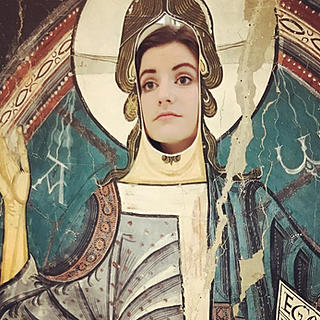
A tour bus, a dangling cable, a literary landmark, and a question I’ve been trying to answer for years.

Here’s what I remember about the accident- I was a tour guide in San Francisco, telling stories to strangers on top of a double-decker bus. I was trained to stand for the whole tour at the front of the bus, facing my audience.
On this fateful day, I'd been paired with a new driver who was fresh from the company that had essentially just been dissolved into ours. So he was a veteran driver in terms of skill, but was learning a new route. I say learning, not training, because the company figured there was no need to train a veteran driver. From his very first day, he was on his own, with only me to guide him… which is difficult when you’re giving a live performance, backwards, on a moving vehicle.
Predictably, the new driver (upon whom I place absolutely zero blame, it was the company's responsibility to train him), missed our regular turn-off, panicked, and turned down the wrong street. When I noticed this, I was a bit thrown at first… but then I realized what street we'd turned down.
This was Lyon St. in the Haight Ashbury district.
We were about to pass the Joplin/Coolbrith house.

Listen. Giving tours can get monotonous. At this point in my career, I was telling the same stories, over and over and over again, for four tours a day, six days a week. What I was presenting to tourists was novel and extraordinary to them, every time. And I've said it before, "the most delicious sound in the world to a tour guide is a gasp of admiration from a crowd. We know that gasp is for some marvelous spectacle we’re showing to you but we secretly take a cut of it for ourselves to buff up our own egos."
But ego is one thing. Soul is another. Underneath my script, I was having an existential crisis.
When you’re stuck on an endless loop, the stories start to percolate. You see their deeper meaning as you present them, not as individual "fun facts", but as a constructed timeline of events, each one in some way a consequence of the others. These hidden connections and human insights are life-sustaining. They’re the reason you tell stories. They’re the spark that makes people want to keep their antsy-pants butts in their seats and listen to you, even when they could be climbing all over each other for the perfect Instagram shot of Fisherman’s Wharf, the famous Lombard curvy-street, the Golden Gate Bridge, a cable-car, or Haight-Ashbury — the neighborhood that birthed the hippie movement and hosted “The Summer of Love” back in 1967.

But when you’re on someone else’s route, one designed by a corporate entity, no less, with no concept of the timeline, of the art of storytelling, with no regard for theme or the character arc of the city, and certainly no interest in the stories you most want to tell… when you’re taking the same turns, answering the same questions, solving the same problems, over and over and over and over and over and over and over… when you’re watching the city change on a daily basis in such minute detail that those changes stop registering… all the bigger-on-the-inside gaps in your understanding of your world have no time and no motivation to continue to be investigated. You get bored. The job becomes a slog. You exhaust yourself. The extra energy you needed to feed yourself with new information, new meaning, new synapses connecting in your brain, just isn’t there anymore.
…And then, one day, your new driver accidentally turns down the wrong street.
And you never usually get a chance to show this to anyone, but Janis Joplin briefly lived on this street, in a house that was once occupied by California’s first poet laureate, Ina Coolbrith, who was a soulful powerhouse woman in her own right and a longtime hero of yours.

Please excuse this historical rant but Ina Coolbrith was simultaneously the daughter and niece of Joseph Smith- the founder of mormonism. She escaped the church in her teens, befriended Mark Twain, became an incredible writer in her own right, co-edited the most popular literary magazine of the time (the Overland Monthly), and became the first head librarian of the Oakland Free Public Library from 1874 to 1893, where she mentored Jack London (who called her his “literary mother”), and Isadora Duncan (who we call The Mother of Modern Dance).
Ina was the first American woman to give a commencement speech at a university and had a crimson, hybrid version of the California Poppy (the state flower) named after her.

I think she and Janis would have been fascinated with each other, had they lived in the same decade, but it's cool to imagine them looking out the same windows across time, out at the street we were driving down now because we took a wrong turn.
Isadora Duncan, by the way — not to go on yet another tangent, but I swear this is relevant — the woman who pioneered modern/interpretive dance? She died in 1927 in one of the most tragically sudden accidents in modern history. Her long, crimson, silk scarf got caught in the wheel spokes of the sports car she was riding in. The scarf tightened around her throat, yanked her back, and her neck snapped. Just like that. All that pioneering talent, all that leaping spirit, gone in the turn of a wheel.

So I’m rattling off these stories as fast as I can, pointing out the otherwise plain-looking, greenish house that connects these powerful, creative women across history, when I feel something brush the top of my beanie…
Before I’d even registered why, I'd ducked.
I don't remember making the decision to duck, I just did.
Then I felt a-
ZAP!
-deeper than any electric shock I'd ever felt before. I swear, I felt it in my bones.
Then, in super-quick succession, I registered that:
I was just hit with a power line.
There were several more coming towards us, even lower, at what would have been at the level of my throat.
I had a bus full of people that could get seriously injured and we weren't stopping.

I shouted for everyone to duck down and made sure the lines passed over their heads safely. It was impossibly tense while we made our way underneath them. I genuinely have no idea if my driver had the sense to slow down in that moment, or if he sped up to get us back onto our route as quickly as possible. As established, time distorts around novel experiences.
I know that the legal speed limit for Lyon Street at the time was 25 mph. I know that my body was humming and my heart was pounding. I know that I was too distracted with checking on people and making sure everyone was ok to fully register what I was feeling myself.
I know that the second we were past the danger of the cables and I'd established that everyone was ok, I inexplicably became completely hyper-focused on going about the tour as if nothing whatsoever had just happened.
I imagine this had to have been the adrenaline, right?
Despite everybody probably having seen exactly what just happened (someone might even have had more of an understanding of it than I did) it became really important to me, all of a sudden, to not acknowledge it.
My singular focus was to get the tour back on track. Stick to the script, distract from the chaos, keep the cheer. I was ok, they were ok, our driver was ok, everything was ok, don't panic, stay focused. And maybe the tourists were as confused as I was about what happened, or maybe they just took my lead, because nobody said anything about it for the rest of the tour or after the tour, and then I never saw those people ever again. This means I never got a witness account. I only have what I remember, and I'm aware that memory is extremely fallible.

So here’s my confusion and my question:
I’ve always taken it for granted that I was electrocuted that day.
When I informed my boss about what happened, he tried to gaslight me into thinking that it was my fault because I had been trained "from the start" to do my tours sitting down. Completely untrue. And this was the straw that broke the camel’s back, as I’d already had to fight to receive the same salary as my male coworkers, and when I had reported one of them for sexual harassment not long before this incident, my report was passed around the company and laughed at. In the end, I reported the company to OSHA — for this and many other health and safety violations — and I quit.
Before my OSHA report had even been processed, another tour bus from a completely different tour company turned down the wrong street, and those tourists weren’t so lucky.
I heard from the few coworkers I’d stayed in touch with that one woman “lost her freaking nose”.
I initially felt a horrible, gut-wrenching guilt that I hadn't been successful at ensuring that what happened to me could never happen to anyone ever again. That guilt's never gone away and probably never will. There have apparently been restrictions put on the bus routes since then, but I couldn't tell you how well those are enforced.
I also started to wonder, though… how does a woman lose her nose from being electrocuted?
Was that even possible?
So I looked up what happened in that 2013 incident and learned that the people on that bus weren’t electrocuted like I always thought they must have been. Their injuries were from the sheer blunt-force trauma that occurs when a cable gets stuck on a windshield, gets stretched like a rubber-band, and then snaps back directly into people’s faces. And that makes a lot more sense when you consider the injuries — That woman didn’t “lose” her nose, her nose was crushed.
And now I’m starting to wonder if it’s even possible for me to have been electrocuted that day on Lyon Street, in front of the Joplin/Coolbrith house, or if I would have even been hurt at all had I not ducked.
Because it’s a story that hasn’t sat right with me for years, despite having personally experienced it.
What I’ve learned is that power cables have a protective coating that makes them generally safe to the touch, as long as they're not downed. And, if that's not enough of an assurance, the voltage that runs through them is apparently pretty negligible. Not enough to harm someone or even cause that shock I could have sworn I felt.
So did I really just…. imagine the electrocution part? Is it possible that I was so shocked emotionally or jump-scared by the moment that I tricked myself into thinking I was electrocuted?
To break it down, I’m wondering two things:
1. Is there any possibility that the electric shock was real?
Is there something I haven’t thought of? Could something in my hat or my microphone or the bus have conducted the electricity through me? Or should I accept, once and for all, that my brain played an impressively convincing trick on me? I mean, certainly, the hippies in Haight-Ashbury, of all people, know the extent to which our senses and perceptions can be altered by outside influences. But I'm hoping this article reaches an electrician who can fill me in on what I don't know.
2. If I hadn’t ducked in time, would the clothesline effect alone have hurt us?
Our bus didn't have a top-deck windshield to create that snap-back effect that hurt people in 2013. If I'd still been standing, or if any of my tourists had stood up for a picture in that moment (which they’re not supposed to do, obviously, but preventing a tourist with a camera from popping up is like playing wack-a-mole with a wacker made of words), would the force of getting clotheslined by the low-hanging cables at 25mph have hurt us? Would my neck have snapped like Isadora Duncan's?

I’m reaching out to my 31k followers here on Medium in the hopes that some of you have science-y brains that can help me solve this long-time mystery.
It would mean a lot to have an answer after all these years — not just to ease my curiosity, but because that was the day I was humbled and literally driven to my knees in the presence of two powerful, feminine spirits.
These women had achieved greatness in fields heavily guarded by men — Coolbrith as a premier literary editor and poet in the 19th-century, and Joplin as a powerhouse frontwoman of the 1960s rock scene. Both had to step outside of their own endless, weary loops to do so. It makes me wonder — what shocked them out of it?
It must’ve been painful.
This moment, for me, sparked the end of my tour guiding career and put me on a different life path. The danger I’d been put in and my disappointment with how it was handled broke my loyalty to my employer, of course. But the unexpected electric thrill of taking a wrong turn was the real shock to the system I’d needed. I ended up moving to Spain, becoming a writer, and being asked to write a book with someone who grew up amongst the giants of Haight-Ashbury. Essentially, I’ve been given a metaphorical backstage pass from someone who was born with a laminated one around her neck. So, however that left-turn came about, whether the shock itself was physical or metaphorical, I think I’m grateful.
I had been dead so many years-
And I had missed you so.
I thought in heaven there were no tears,
But ah, their weary flow!
And when at last the joy-word came,
An hour to wander back,
My spirit flashed, a living flame,
Along that mystic track.
I sped the pathway of the stars
And the abyss of night;
Past all space-barriers and bars
I winged my eager flight;
I found you, Love! O bitter day!
You had remembered not!
Farther than life itself away-
My very name forgot.
— Return, by Ina Coolbrith, 1895


I would like you to know that I appreciate every notification of your new article in my mail. Reading your musings is a real treat. It's like an invitation to a six-course dinner spiced by long, engaging, yet silent inner conversations, which always lead in some unexpected directions. Thank you for what you do.